
Digitally Guided Implants
Implant position, angle and depth are decided on the computer first, and the implant is placed according to that plan.
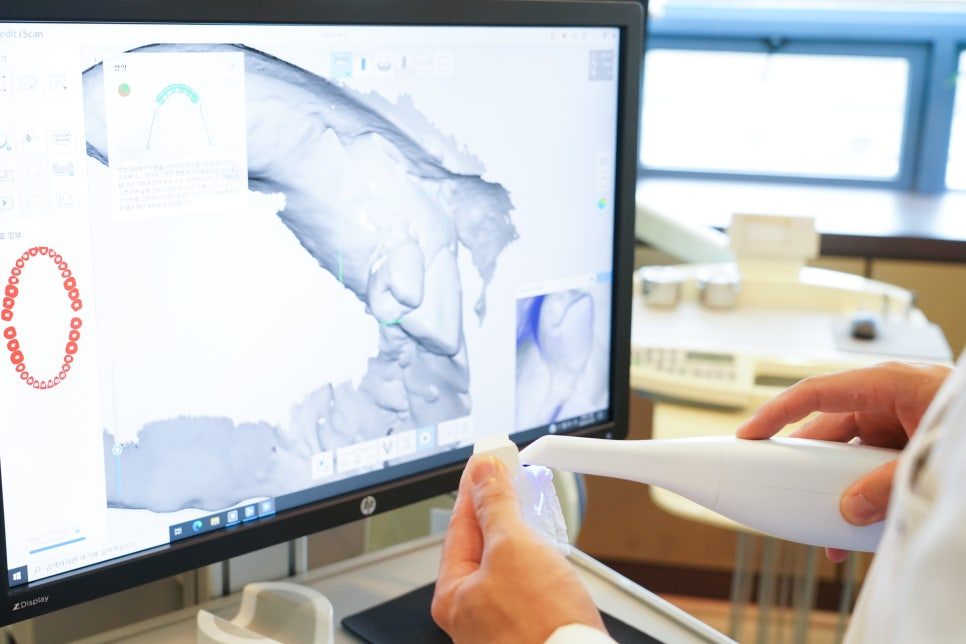
With digitally guided implants, the implant position is planned while viewing bone, nerves, gums and the shape of the future tooth together from 3D CT and intraoral scan data. Surgery is then done with a custom guide that drills exactly at the planned position.
Who it is for
- Implant surgery feels frightening
- The site is close to a nerve, so an exact position matters
- Several implants need to be placed at once
- The site is visible, like a front tooth
- I worry about healing because of diabetes or similar
- I want shorter surgery time
A guide is not always the right choice
If there is enough bone and gum, implants can be placed without opening the gum widely, so recovery is faster. But when bone grafting is needed or it is hard to open the mouth wide, placing the implant under direct view may be safer. We explain the method that suits your situation.
Advantages
Exactly where planned
Distances to nerves, the sinus and neighboring teeth are calculated in advance.
Small incisions
When conditions allow, the gum is not opened widely, so there is less swelling and pain.
Designed from the tooth
The position of the future tooth is set first, and the implant direction follows it.
Treatment steps
- 3D CT · intraoral scanWe collect data on bone, nerves, gums and tooth alignment.
- Digital planningWe decide implant position, angle and depth and explain the plan.
- Guide fabricationA custom guide is made to drill exactly as planned.
- SurgeryThe guide is fitted and the implant is placed.
- RestorationOnce the implant bonds with the bone, the tooth is attached and maintained regularly.
- Anesthesia
- Local anesthesia
- Preparation
- 3D CT · intraoral scan
- Guide fabrication
- A separate visit before surgery
- Incision
- Minimized when conditions allow
Before treatment
- An extra visit before surgery may be needed to make the guide.
- If you cannot open your mouth wide, a guide is difficult to use for back molars.
- Where bone grafting is needed, surgery under direct view may be better.
- Even with a guide, the plan may be adjusted during surgery depending on the bone.
- Treatment results and recovery time vary with each patient's oral condition.
Frequently asked questions
Is there no incision with guided implants?
With enough bone and gum, the implant can be placed through a small opening. If bone is lacking or the gum needs reinforcement, an incision is needed.
Do they last longer than regular implants?
Lifespan depends more on gum and bone care than on position accuracy. A guide is a tool that helps place the implant exactly where planned.
Can the tooth be attached the same day?
If the implant is firmly fixed in the bone, a temporary tooth may be attached right away. If stability is insufficient, we wait until it bonds with the bone.
Does it cost more?
Planning and guide fabrication costs may be included. We tell you exactly after diagnosis.
Is a guide used in every case?
No. We recommend it when a guide helps, and place the implant under direct view when that is better.

Board-certified periodontist · wrote and reviewed this page. Lectures for dentists on digitally guided surgery. Last updated