
- Home
- Impacted wisdom tooth extraction
Impacted wisdom tooth extraction
If another clinic referred you to a university hospital because your wisdom tooth is lying sideways or buried, talk to us first.
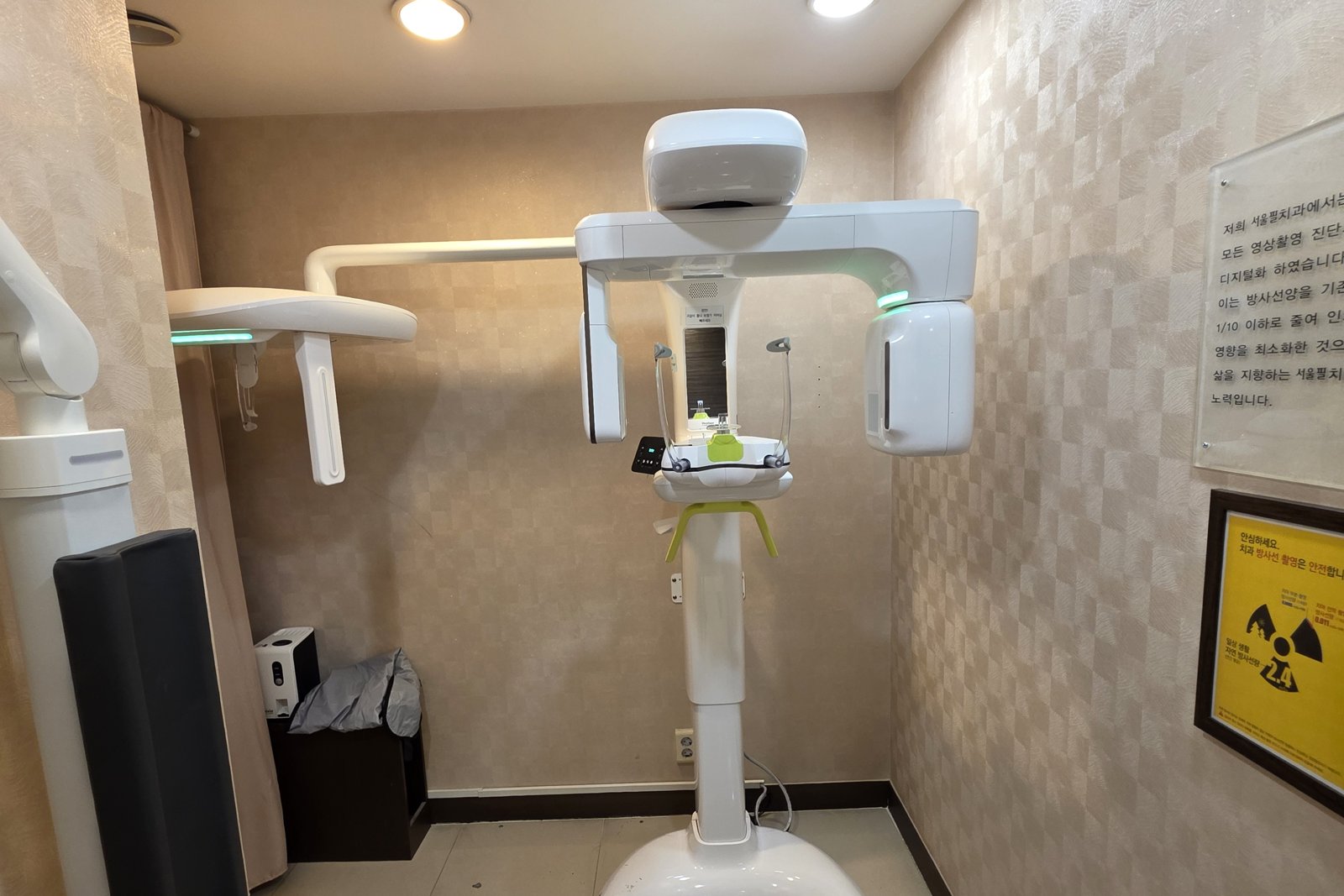
Impacted wisdom teeth are buried in the gum or bone or grow sideways because there is not enough space. After checking the distance to the lower jaw nerve with 3D CT, the tooth is divided and removed in small pieces if needed to reduce damage to surrounding bone and nerves.
Who it is for
- The gum behind my back molars often swells and hurts
- I was told my wisdom tooth is lying sideways
- The molar in front of my wisdom tooth has a cavity
- I was told to go to a university hospital because it is close to the nerve
- I was told to remove wisdom teeth before orthodontics
- It is hard to open my mouth and under my jaw is swollen

What should I do when my wisdom tooth is swollen and painful?
A swollen, painful wisdom tooth is often extracted after the inflammation settles first. We check the distance to the nerve with 3D CT and explain when and how to extract it.
Not every wisdom tooth needs to come out
Wisdom teeth that grew straight, can be cleaned well and meet the opposing teeth can stay. We recommend extraction for repeated inflammation, cavities or bone damage on the neighboring molar, or cysts.
Extraction methods
Simple extraction
Wisdom teeth that grew straight are removed quickly.
Sectional extraction
Sideways wisdom teeth are divided and removed in small pieces to reduce bone damage.
Wisdom teeth near the nerve
We check the nerve position with 3D CT and consider leaving part of the root if needed.
Treatment steps
- Panoramic X-ray · 3D CTWe check the tooth's direction, root shape and distance to the nerve.
- ConsultationWe explain whether extraction is needed, how long it takes and the recovery process.
- ExtractionThe tooth is extracted under local anesthesia and the area is stitched.
- Dressing · stitch removalDressing after 2–3 days, stitches out after about 1 week.
- Anesthesia
- Local anesthesia
- Diagnosis
- 3D CT
- Swelling
- Peaks on days 2–3
- Stitch removal
- After about 1 week
Before treatment
- Swelling peaks 2–3 days after extraction and mostly subsides within a week.
- If the blood clot comes out, a painful dry socket can develop, so avoid smoking and straws.
- When the tooth is near the nerve, the lip or tongue may rarely feel numb; this usually recovers over time.
- Upper wisdom teeth may rarely connect to the sinus, so avoid blowing your nose hard.
- Treatment results and recovery time vary with each patient's oral condition.
Frequently asked questions
Is wisdom tooth extraction covered by health insurance?
Wisdom tooth extraction is covered by Korean national health insurance regardless of how impacted it is.
Can both sides be extracted at once?
It is possible, but eating becomes uncomfortable. Usually the upper and lower teeth on the same side are removed together and the other side separately.
Can I smoke after extraction?
It is best to avoid it for at least a week. Smoking dislodges the blood clot, slows healing and raises the risk of dry socket.
How long does swelling last?
It peaks on days 2–3 and mostly subsides within a week. Cold compresses help on the first day and warm compresses from the third day.
Are there cases that need a university hospital?
If general health conditions require hospitalization or there is a large cyst, we recommend a university hospital. Most other impacted wisdom teeth are treated here after a 3D CT check.

Board-certified periodontist · wrote and reviewed this page. Has lectured for dentists on impacted wisdom tooth extraction. Last updated