
- Home
- Gum Treatment
- Gum grafting · root coverage
Gum grafting · root coverage
If your teeth look longer than before or feel sensitive at the gum line, your gums may have receded.
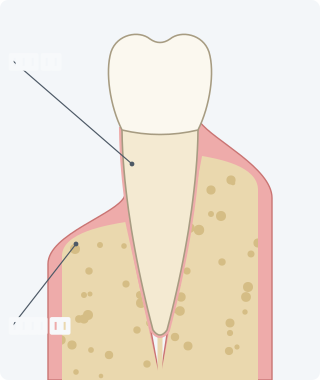
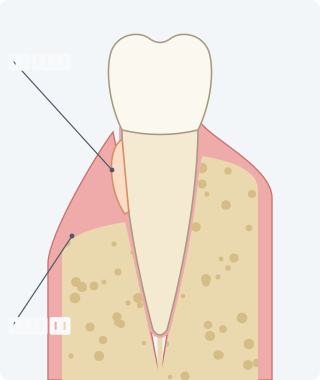
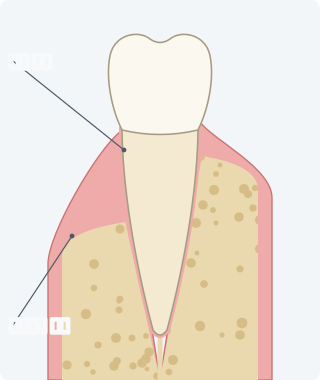
Root coverage is surgery that covers tooth roots exposed by receded gums with gum tissue. The surrounding gum is pulled up, and if needed a thin piece of connective tissue from the palate is placed underneath to thicken the gum.
Who it is for
- Teeth look increasingly long
- The gum line is sensitive to cold water
- There is a groove at the gum line
- Front gums became thin after orthodontics
- Gums are so thin that brushing hurts
- Gum heights look uneven when I smile
Why gums recede
Gums recede little by little when naturally thin gums and bone combine with hard side-to-side brushing, teeth grinding, tooth movement during orthodontics or long-standing gum inflammation. If the cause remains and the root is only covered, the gum can recede again, so we check the cause before surgery.

We change the habits that cause it first
Brushing hard from side to side is a common cause of receding gums. Before and after surgery, we use a dental model to show a brushing method that is gentler on the gums.
How the surgery works
Connective tissue is placed over the exposed root, and the surrounding gum is pulled up to cover both.
Surgical methods
Connective tissue graft
Connective tissue from inside the palate is moved to thicken the gum. This is the most predictable method.
Tunnel · flap advancement
The surrounding gum is lifted to cover the root without large incisions. Used when treating several teeth at once.
Substitute materials
A collagen matrix or acellular dermis avoids taking tissue from the palate. We decide based on the area and gum thickness.
Treatment steps
- Examination and diagnosisWe check gum thickness, bone height between teeth and the habits causing recession, and explain the expected result.
- Preparing the gumsAny inflammation is treated first and your brushing method is adjusted.
- SurgeryDone under local anesthesia, taking about an hour depending on the area.
- Stitch removalStitches are removed at a visit about 1–2 weeks later.
- Healing and maintenanceWe follow progress for the 2–3 months it takes the gum to settle, then continue with regular checkups.
- Anesthesia
- Local anesthesia
- Surgery time
- About 1 hour
- Stitch removal
- After 1–2 weeks
- Back to daily life
- Usually the next day
Before surgery
- If tissue is taken from the palate, that area is the most uncomfortable for a few days.
- Swelling and bruising may last about 3–5 days.
- If bone and gum between the teeth are largely lost, the root may be only partly covered.
- If the habits causing recession continue, the gum may recede again.
- Results and recovery time vary with each patient's gum condition.
Frequently asked questions
Does gum grafting hurt a lot?
Surgery is done under local anesthesia, so there is almost no pain during the procedure. If tissue is taken from the palate, that area is the most uncomfortable for a few days, which painkillers and a protective plate can ease.
Can I return to daily life right after surgery?
Most people can go back to work the next day. Stitches come out after about 1–2 weeks; until then, avoid brushing the surgical area and eating hard food.
Will all of the receded gum be covered?
It depends on how much bone and gum remain between the teeth. If that tissue remains, full coverage is likely; if much is lost, only part may be covered, and we explain the expected range before surgery.
Is there a method that does not take tissue from the palate?
Depending on the area and gum thickness, substitute materials such as a collagen matrix or acellular dermis can be used. Results may be somewhat less predictable than with your own tissue, so we compare the pros and cons and decide together.
Can gums recede again after surgery?
If hard side-to-side brushing, teeth grinding or inflammation continue, recession can return. We correct the habits that cause it and check regularly.

Board-certified periodontist · wrote and reviewed this page. Lectures for dentists on periodontal plastic surgery. Last updated